

The Strategic Evolution of Environmental Governance: A Comprehensive Analysis of the ISO 14001:2026 Revision
The maritime and engineering sectors are entering a transformative era with the official release of ISO 14001:2026. This version marks a pivotal moment in the history of environmental management systems, reflecting a global shift in how organizations perceive, manage, and report environmental impacts. This revision is not merely an incremental update; it is a strategic realignment designed to meet the escalating challenges of the 21st century, including climate change, biodiversity loss, and the transition toward a circular economy.
Since the first edition launched in 1996, ISO 14001 has become the world’s most widely used environmental management standard, with over 670,000 certified organizations globally. However, the landscape of environmental risk has evolved significantly since the 2015 edition. Climate change is no longer a background concern but a core business risk affecting operations, supply chains, and financial performance. Consequently, the 2026 edition serves as a robust framework to turn corporate ambition into measurable action, aligning environmental management with strategic business objectives.

Renewable Energy Infrastructure: Integrated Solar Power Systems and Substations within a 2026 Environmental Management Framework.
Structural Alignment and the Harmonized Structure
A fundamental aspect of the 2026 revision is the full adoption of the latest ISO Harmonized Structure. This structure provides a common set of clauses, definitions, and core text for all ISO management standards. By aligning ISO 14001:2026 with this structure, it is significantly easier for organizations to build an integrated management system that combines environmental management with quality, health, safety, and energy.
This alignment includes subtle but meaningful terminology shifts. For instance, the phrase fulfill compliance obligations has been replaced with meet compliance obligations. These changes support a more streamlined governance model and reduce the administrative burden of managing multiple standalone systems.
Leadership Accountability and Non-Delegable Governance
The 2026 revision takes a firm stance on leadership, aiming to close the gap between corporate policy and operational reality. Under Clause 5.1, top management now carries personal, non-delegable accountability for the performance and effectiveness of the EMS.
Historically, environmental management was frequently delegated to a dedicated manager or a department, with senior leadership involved only during annual reviews. The 2026 standard clarifies that while tasks can be delegated, the ultimate accountability for the system's success cannot be shifted away from top management. Auditors now verify this engagement through direct interviews and by looking for evidence that environmental performance is integrated into the organization’s core business processes.
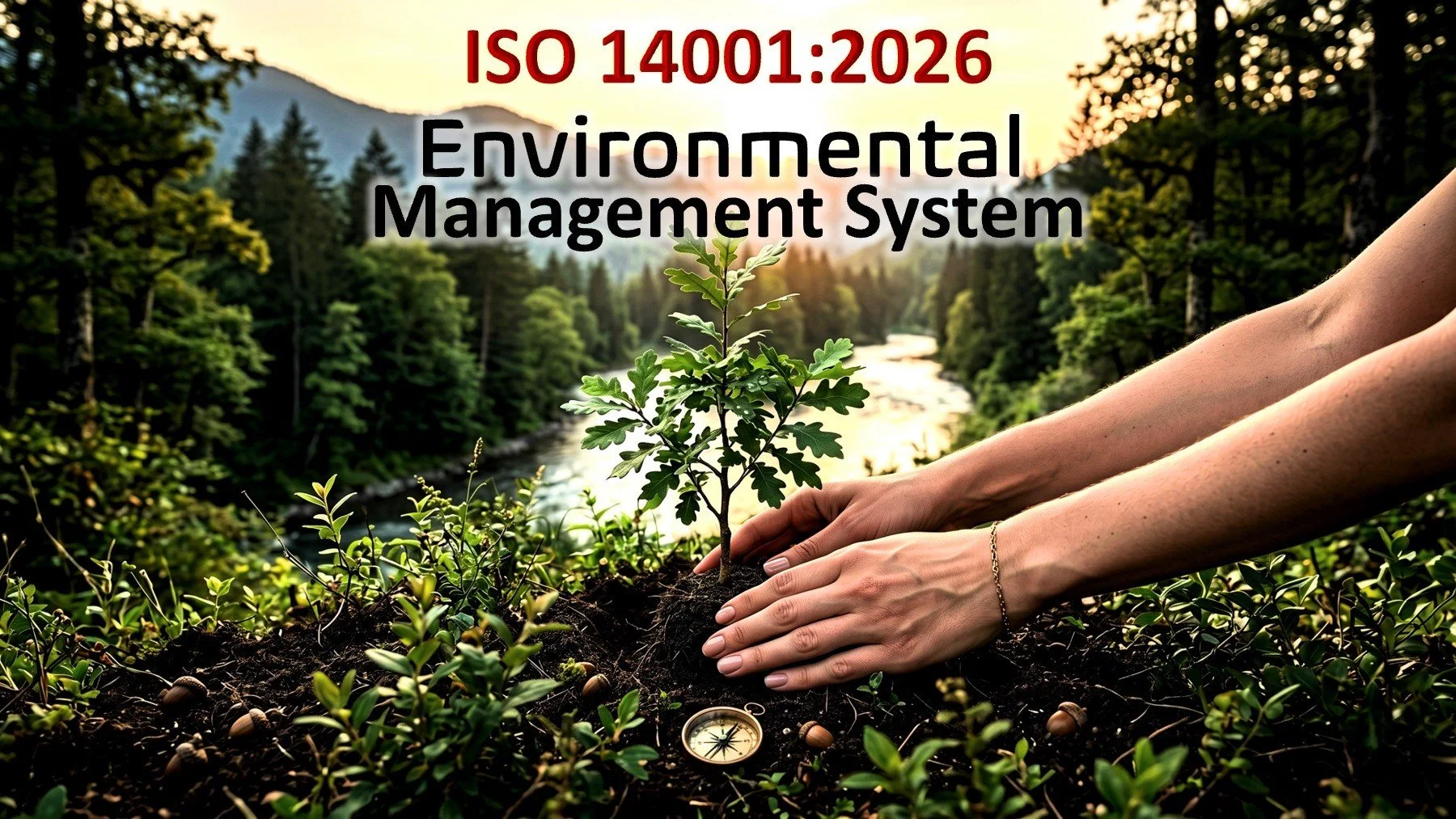
ISO 14001:2026 Operational Integration
To complement the strategic analysis of the 2026 revision, this presentation provides a visual roadmap of how these standards translate into real-world industrial and maritime environments. As we move toward the May 2029 transition deadline, understanding the practical application of environmental monitoring and AI-driven data is essential for maintaining a competitive edge.
Key highlights from the video include:
Real-Time Emissions Monitoring: An exploration of how maritime and port operations are utilizing modern sensors to track vessel impacts and meet net-zero targets.
Renewable Energy Synergy: How the new standard ensures that hydroelectric and wind energy production remains compliant with local ecosystem and biodiversity protections.
Smart Manufacturing & AI: The role of artificial intelligence in optimizing industrial power consumption and managing complex global supply chains.
Circular Economy Logistics: Practical examples of waste segregation and the transition toward clean vehicle fleets in the logistics sector.
This video underscores that Reliability, Integrity, and Sustainability are not just theoretical concepts but are measurable outcomes achieved through rigorous documentation and independent external audits.
Sharper Planning and Change Management
Clause 6 has undergone both structural reorganization and a significant expansion through the introduction of a new sub-clause dedicated to the planning of changes.
The introduction of Clause 6.3 is widely regarded as the most significant operational addition in the 2026 revision. While the concept of managing change existed implicitly in the 2015 edition, it is now a formal, standalone requirement for a structured approach to identifying, assessing, and controlling changes that could affect the EMS.
Ad-hoc or reactive management of changes will no longer satisfy auditors. Organizations must now demonstrate a documented method for evaluating environmental impacts before implementing significant changes, such as:
Launching new product lines or services
Relocating sites or commissioning new infrastructure
Modifying production processes or introducing new substances
Significant changes to suppliers or outsourcing arrangements
Transition Timeline and Strategic Milestones
The transition period defined by the International Accreditation Forum provides organizations with a three year window to align their systems with the new requirements. This period is essential for training personnel, updating documentation, and demonstrating conformity through audits.
Phase Milestone Date
Final Draft FDIS Released for Final Ballot January 5, 2026
Publication ISO 14001:2026 Officially Released April 15, 2026
Deadline Expiry of ISO 14001:2015 Certificates May 2029
The Biodiversity Assessment Imperative
One of the most profound changes in the 2026 revision is the elevation of biodiversity and ecosystem health from a peripheral consideration to a core requirement. This reflects the global recognition that biodiversity loss is a systemic risk equal in magnitude to climate change. Organizations must now evaluate their impact on ecosystems with greater rigor, identifying land use changes and declining pollinator populations as potential external factors.
Conclusion: Environmental Management as a Strategic Lever
ISO 14001:2026 is far more than a routine update; it represents a major step forward in strengthening environmental governance and enhancing organizational resilience. By broadening the environmental scope to include biodiversity and climate change, and by formalizing change management and lifecycle thinking, the standard aligns itself with the strategic needs of the modern business world.
Those who use the revision to engage leadership, integrate environmental management into core business strategy, and collaborate more closely with their supply chain will not only meet the new requirements but will also build a more resilient and competitive organization.
🛡️ POST-SCRIPT: This content is for professional development purposes only and does not constitute technical advice. All information regarding advanced qualifications and maritime research is maintained for internal strategic planning and the long-term integrity of the Engineering and Asset Management framework.