

Stop Ignoring Your CTs: The Silent Killers of MSB Stability
Stop Ignoring Your CTs: The Silent Killers of MSB Stability
Last year, I attended a container vessel where the Chief Engineer was battling a persistent, critical issue: unstable load sharing. Despite multiple attempts to tune the governors and Automatic Voltage Regulators (AVRs), the Main Switchboard (MSB) suffered from erratic amperage, load eating, and unpredictable shedding.
The situation had escalated to a formal complaint to Technical Management. Arriving onboard as the Owner Representative, I decided to step back from the usual control troubleshooting to examine the primary feedback loop.
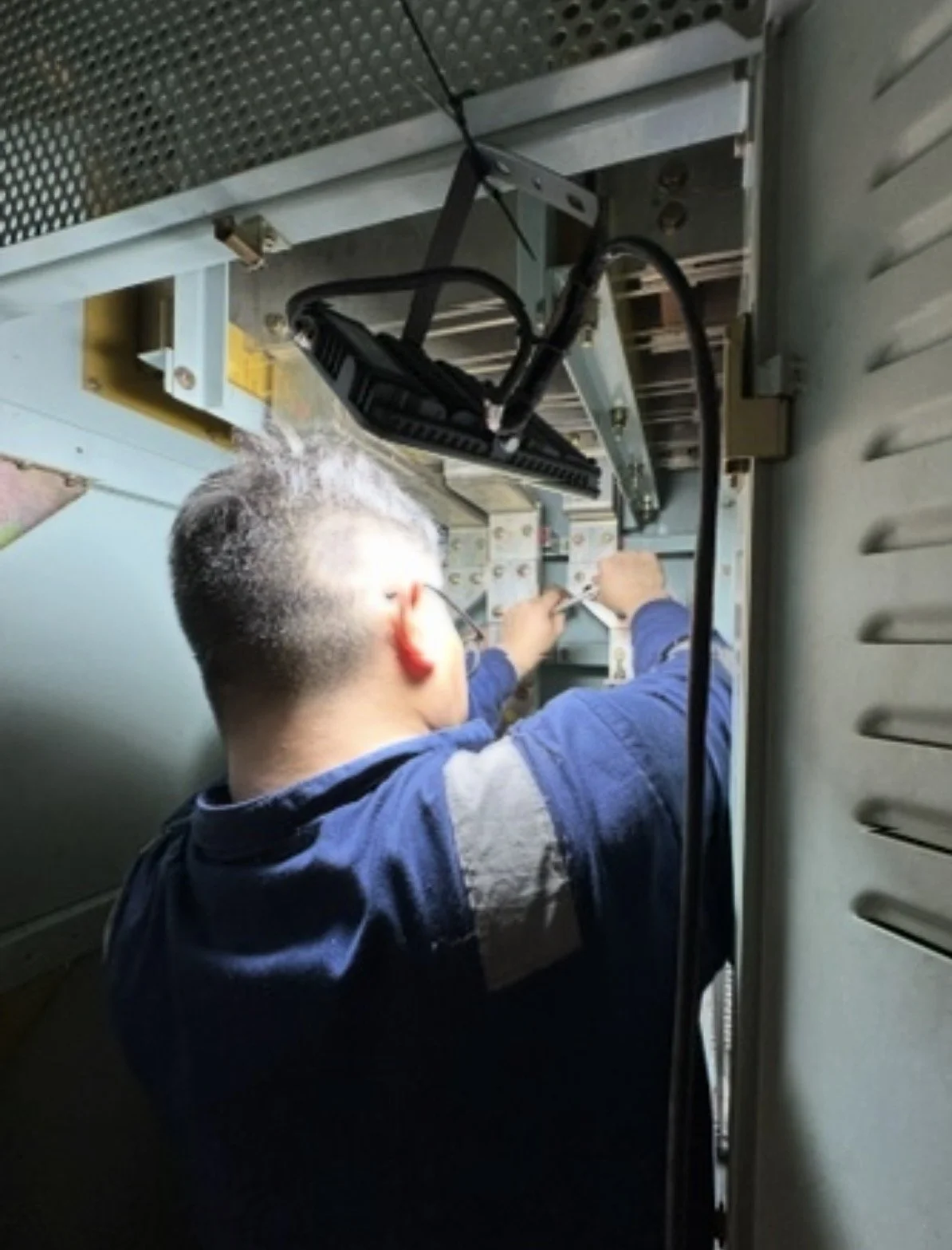
CT Transformer Replacement
I am executing the replacement of a degraded Current Transformer within the Main Switchboard of a container vessel. This critical hardware update was necessary to rectify erratic load sharing and ensure precise signal feedback for the Power Management System. Success in maritime engineering often depends on these high-stakes physical interventions to maintain total system stability.
The Physics of Failure: Why CTs Matter
Upon inspection, the diagnosis was clear. The Current Transformers (CT) had degraded beyond operational limits. These components are the eyes of the Power Management System. When a CT enters a state of saturation, the magnetic core can no longer accurately reflect the primary current on the secondary side. This sends noisy or clipped signals to the PMS, forcing generators to hunt for a stable load, creating a dangerous cycle of instability.
By physically removing the defective units and replacing them with new BHO.66 3600/5 0.5 Class CTs, the system stabilized immediately. What appeared to be a complex control failure was actually straightforward hardware degradation.
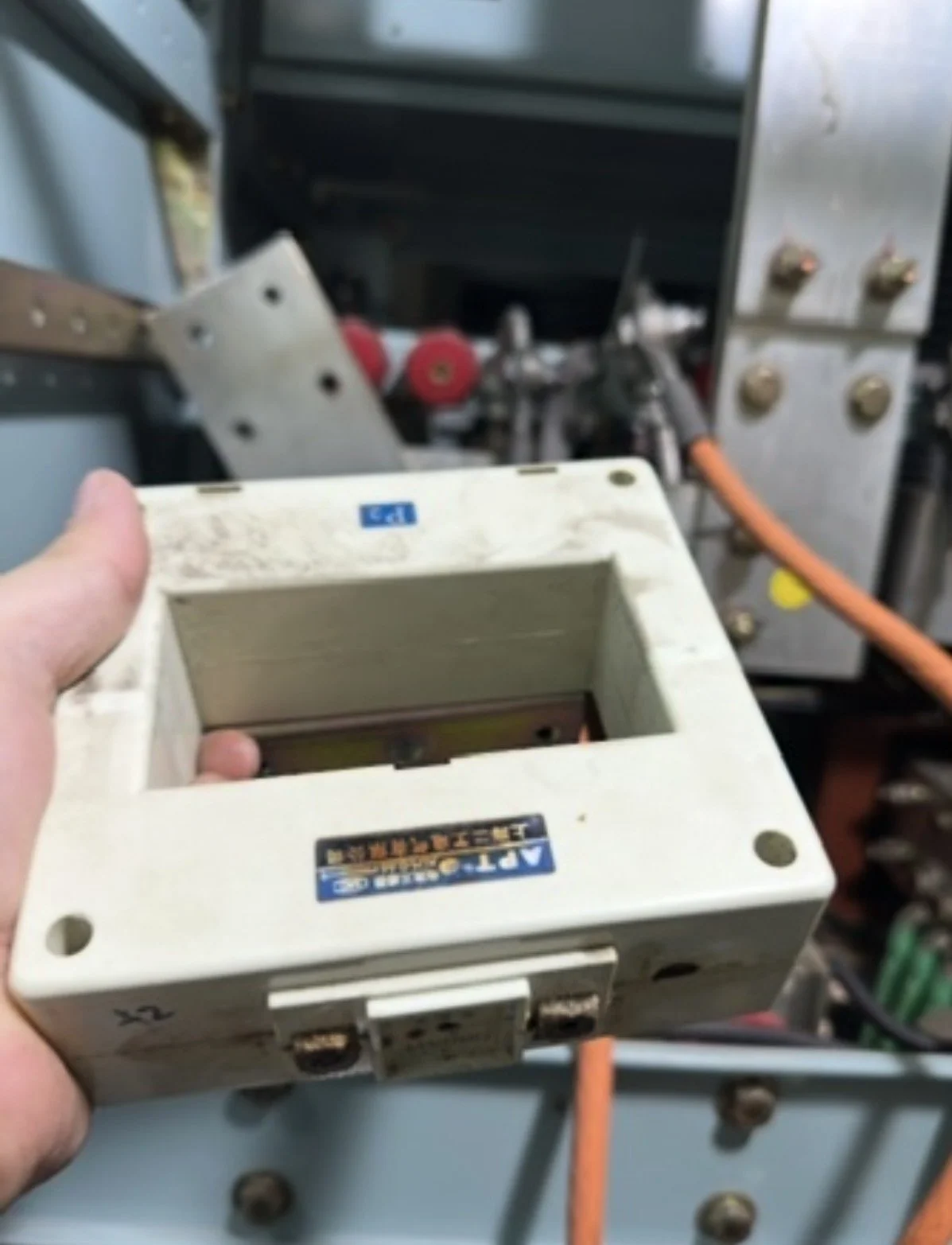
Component Failure Analysis
Defective Current Transformer (CT) This unit was removed after exhibiting significant saturation issues that compromised the accuracy of the vessel’s power metering. A defective CT like this provides false current readings to the Power Management System, leading to dangerous load imbalances and synchronization failures. Replacing this unit was vital to restoring the electrical integrity and operational safety of the Main Switchboard.
Why CT Replacement (TBR) is a Drydock Must
For vessels reaching the 10-to-15-year mark, CT degradation is inevitable. Internal insulation breakdown caused by years of thermal cycling and shipboard vibration creates the exact instability observed on this vessel.
Furthermore, the risk of an open secondary is a major safety concern. Unlike a standard transformer, an open circuited CT secondary can generate thousands of volts. This leads to catastrophic insulation failure, arc flashes, or localized fires within the MSB.
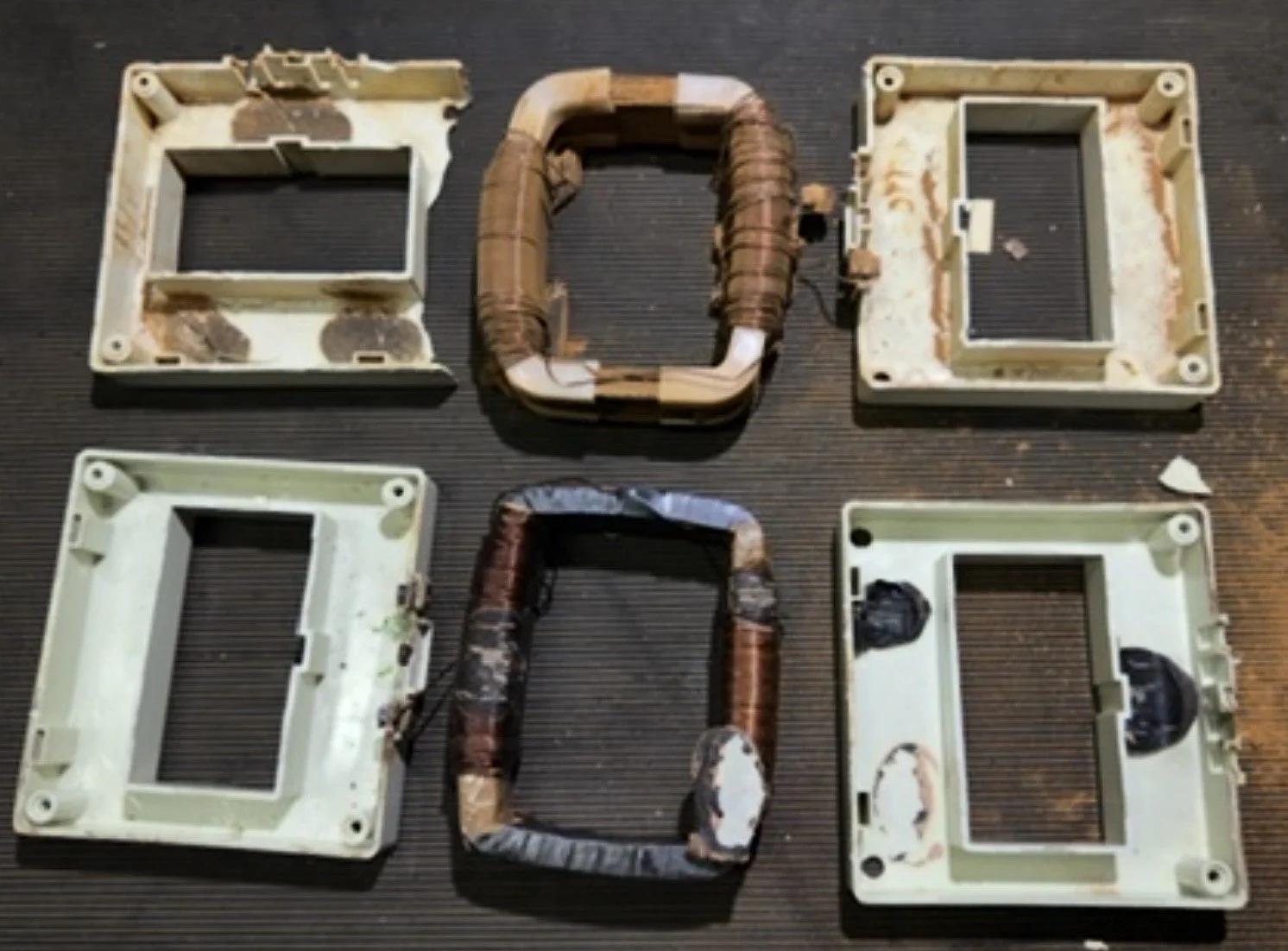
Internal Damage Assessment
Dissected Class 0.5 Current Transformers This internal view reveals the extensive degradation within the secondary windings of the defective CTs. The visible insulation breakdown and core wear are the primary causes of the signal inaccuracies and saturation issues previously noted. By dissecting these units, we can confirm that physical thermal stress or age-related fatigue led to the failure of the Class 0.5 precision components, necessitating a complete replacement to secure the vessel’s power stability.
Strategic PMS Recommendations
To maintain MSB stability and safety, I recommend this research backed actions:
Saturation Curve Testing: During drydock, perform a saturation test to ensure the CT operates in the linear region of its excitation curve.
Burden Calculation: Verify that the connected meters and relays do not exceed the rated burden (VA) of the CT, which leads to premature inaccuracy.
Secondary Loop Integrity: Ensure all terminal connections are vibration proof. A loose connection here is not just a signal issue; it is a high voltage hazard.
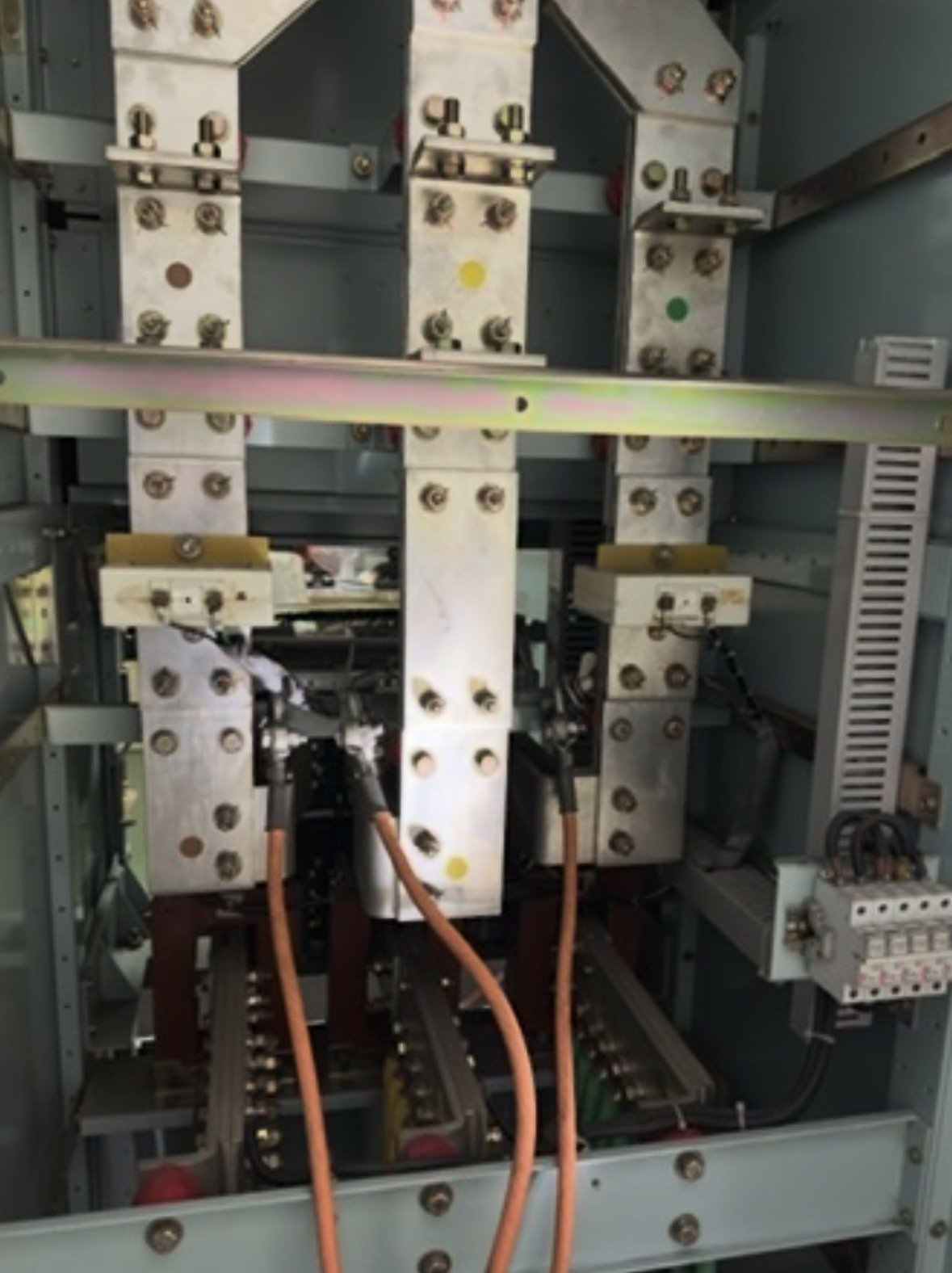
Operational Restoration
Commissioning Complete: Main Switchboard The final installation of the replacement Current Transformers is now complete, and the metering integrity of the Main Switchboard is fully restored. With the precision Class 0.5 units in place, the false signals causing destabilization have been eliminated. Successful commissioning tests confirmed accurate load sharing and seamless parallel operation, demonstrating how critical, targeted technical interventions are to the overall resilience and operational longevity of high-voltage maritime assets.
Reliability is not just about fixing what is broken. It is about knowing which small components hold the entire system together.